The other night I opened the fridge, stared at the sad half-vegetables and random jars, and felt that familiar, stubborn boredom. I’d scrolled through recipes on my phone for twenty minutes. Everything looked good, but nothing felt right for right now. My brain wanted comfort, but not heavy. Simple, but not bland. Special, but not fussy.
I closed the apps, shut the fridge, and did what I always end up doing on nights like this. I pulled out a pan, a clove of garlic, a box of pasta, and the same few things I’ve reached for a hundred times.
I always come back to this recipe when nothing else sounds right.
The recipe that quietly saves the day
You probably have your own version of it.
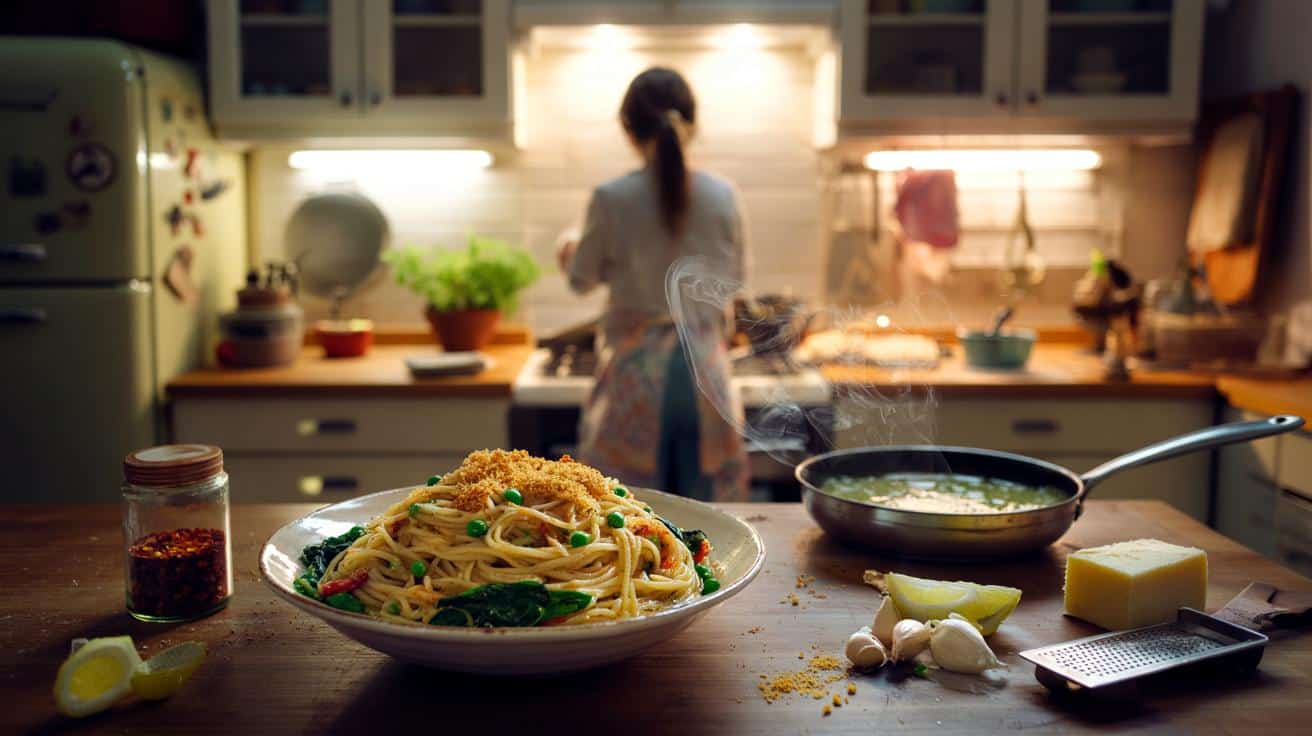
For me, it’s a big bowl of garlicky olive oil pasta, with lemon, chili, and something green thrown in from whatever’s around: spinach, peas, leftover broccoli, even that last handful of arugula wilting in the back. It takes one pan, one pot, and about as long as it takes to play three songs.
There’s nothing flashy about it. No clever garnish. No viral twist. Just warmth, glossy noodles, and that hit of garlic and citrus that wakes you up from the inside.
One Tuesday, after a day of back-to-back video calls, I tried to be “responsible” and follow a new sheet-pan recipe I’d saved. It asked for ingredients I didn’t quite have and steps I didn’t quite care about.
Halfway through, stressed and hungry, I shoved the baking tray aside and started boiling water. While the pasta cooked, I smashed garlic in olive oil, squeezed in lemon, sprinkled chili flakes. A handful of frozen peas went straight from the bag to the pan.
By the time the timer beeped, the house smelled like someone had opened a tiny trattoria in my kitchen. I ate standing at the counter, and that first bite felt like exhaling.
There’s a reason we circle back to the same recipe when our brains are tired and our hearts want something steady. It isn’t just about taste.
➡️ This is why doing “one more thing” often backfires
➡️ This quick trick keeps your fridge from smelling bad without baking soda
➡️ “I couldn’t understand why my sink smelled until I cleaned this hidden part”
➡️ This financial habit helped me feel in control even during uncertain months
➡️ This simple savory bake delivers deep flavor with minimal effort
➡️ “I work as a delivery planner, and this role pays much better than people imagine”
➡️ If your body feels restless in the evening, this explains why
➡️ The daily behaviors that keep your body in tension mode
It’s the safety of knowing exactly how it will turn out. The muscle memory of each step, so you don’t need to scroll, measure, or second-guess. Your hands move. The food appears. Your nervous system drops a notch.
*Our “nothing else sounds right” recipe is less about food and more about having one tiny corner of life that is calm, repeatable, and always on your side.*
How the ritual actually works in real kitchens
Here’s the simple way my comfort pasta happens on autopilot.
Water on first, salt until it “tastes like the sea” as the saying goes. While it heats, I peel two or three cloves of garlic and slice them thin. Pan on low, a generous pour of olive oil, garlic in before it sizzles too hard. I want gentle, lazy bubbles, not aggressive frying.
Then I toss in chili flakes, a pinch of salt, sometimes a splash of pasta water even before the pasta is done. When the noodles are just shy of ready, they go straight into that fragrant oil, with a squeeze of lemon and a bit more water to build a glossy, starchy sauce.
The secret isn’t some chef-level technique. It’s the way the recipe bends to what you have and how you feel.
No Parmesan? I’ve used feta, cheddar, even a spoon of cream cheese. No fresh greens? Frozen spinach, peas, or chopped herbs from the freezer box all do the job.
On stressed-out nights, I keep it monochrome: just garlic, oil, lemon, and noodles. On slightly better days, I toast breadcrumbs in the same pan until golden and sprinkle them on top like fake restaurant magic. It’s the same base recipe, stretching up or down depending on the day I’ve had.
Once you notice it, this pattern shows up everywhere. People swear by one salad they can toss together half-asleep. One soup that starts with onions and ends with quiet. One skillet of eggs, tomatoes, and cheese that rescues late nights.
We don’t cling to these recipes because they’re the most creative. We cling to them because they’re ours. They carry kitchen memories, small victories, and the relief of “I know how to do this” when too many things feel uncertain.
Let’s be honest: nobody really cooks like the internet every single day.
Turning your go-to dish into a tiny life raft
If you don’t have a “nothing else sounds right” recipe yet, you can actually build one on purpose. Start with something you already make often, even if it feels boring: eggs on toast, rice with vegetables, a pan of roasted potatoes.
Now pay attention to what your tired brain reaches for first. Is it salty and crunchy? Warm and spoonable? Noodles that twirl? Choose the version that makes you feel a little softer around the edges and commit to repeating it.
Then run it again and again, tiny tweaks only. Same basic moves, same timing. Over time, your hands learn it so well your thoughts can wander while you cook. That’s when it stops being “a recipe” and becomes a ritual.
A common trap is guilt. You tell yourself you “should” cook something new, something more balanced, more impressive. You scroll, you save, you plan… and then you order takeout because your brain is too fried to start.
Your fallback recipe isn’t a failure of imagination. It’s a support system.
So loosen the rules. Burn the garlic a little one night and laugh. Use dried herbs because the fresh ones died in the fridge. Eat straight from the bowl on the couch. The point of this dish is not to impress anyone. It’s to carry you across the gap between hungry and okay.
Sometimes, while I’m tossing the pasta and the steam hits my face, I catch myself thinking: “This is the most ordinary thing I do, and somehow it always feels like self-respect on a plate.”
- Keep the pantry core simple
Garlic, olive oil, salt, something acidic (lemon or vinegar), and one carb you always have (pasta, rice, bread, potatoes). These are your non-negotiables. - Decide your “emergency add-ins”
Frozen peas, spinach, canned beans, a small wedge of cheese, a jar of olives or capers. Things that last ages and instantly add personality. - Protect the ritual from perfectionism
No special shopping trips, no complicated equipment, no pressure to “upgrade” it every week. This is the one recipe that is allowed to stay comfortably, stubbornly simple.
When a recipe becomes a place you return to
There’s something almost geographic about a dish you trust this much. You don’t just cook it, you visit it. It becomes a kind of address you return to when the rest of the map feels blurred.
Maybe your version is buttered toast with too much jam, always cut the same way. Maybe it’s rice, egg, and soy sauce in a chipped bowl you’ve had for years. Or a pan of roasted vegetables that you eat straight from the tray, standing at the stove.
What matters is not sophistication, but recognition. You know the smell before it even starts. You know the clink of the spoon, the way the steam fogs your glasses, the exact point when you think, “Yes, this again.” That repetition isn’t boring. It’s grounding.
If you paid attention to the recipes you default to in rough weeks, what would you find there? Comfort patterns from childhood? A taste you discovered living alone for the first time? A dish someone made for you once, that you’ve been quietly making for yourself ever since?
The next time you stand in front of your fridge and feel that familiar restlessness, notice what your hands do when your brain gives up on deciding. Notice which recipe quietly steps forward and says, “I’ve got you.”
That might be the one you’ve been coming back to all along.
| Key point | Detail | Value for the reader |
|---|---|---|
| Recognize your fallback recipe | Notice what you instinctively cook when you’re tired, uninspired, or overwhelmed | Helps you identify a reliable, low-stress option for difficult days |
| Build a flexible pantry core | Keep simple staples like garlic, olive oil, carbs, and one or two long-lasting add-ins | Makes it easy to cook comforting food without planning or special shopping |
| Let go of food guilt | Treat your go-to recipe as a ritual, not a failure to be “creative enough” | Reduces pressure around cooking and turns everyday meals into moments of care |
FAQ:
- Question 1What if my “go-to” recipe feels too basic or embarrassing?
- Question 2How many fallback recipes should I have?
- Question 3Can a comfort recipe still be healthy?
- Question 4What if my family gets bored of the same dish?
- Question 5How do I start if I’m not confident in the kitchen?