The doorbell rings and your brain does that quick, panicked scan of the living room. Cushions half-sliding off the sofa, shoes abandoned in the hallway, yesterday’s mug quietly judging you from the coffee table. You do a frantic 30-second shuffle, throwing things onto any available surface, praying your guest doesn’t need to use the bathroom where the real chaos lives. And yet, you probably have that one friend whose place looks calm and put-together every single time you visit. Not showroom perfect. Just… consistently tidy. You leave their home wondering what secret chore chart they’re hiding, or if they’ve unlocked some adulting cheat code that you completely missed at school.
There is one deceptively simple cleaning habit they’re using.
The quiet cleaning habit that changes everything
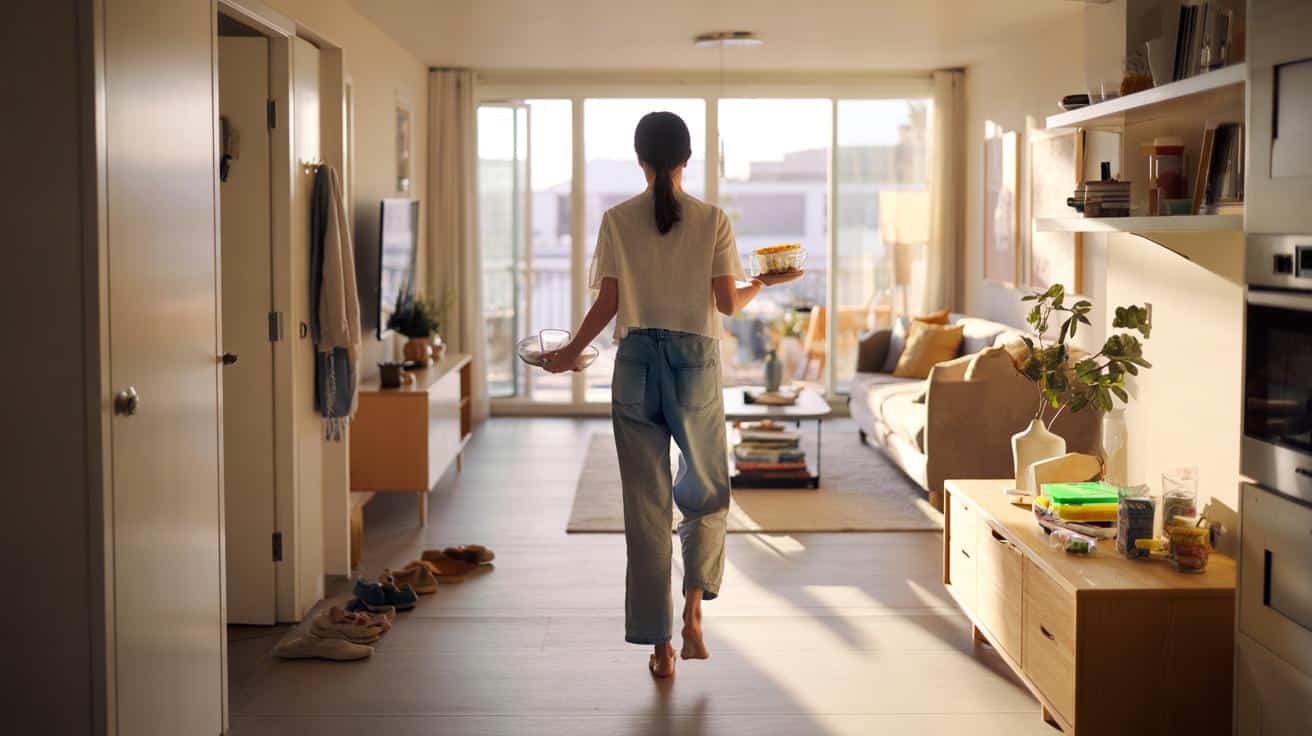
The habit that makes guests think your home is always tidy is this: you never leave a room empty-handed. That’s it. No fancy product, no two-hour Sunday reset, no color-coded calendar on the fridge. Just a constant, low-effort flow of small things going back where they belong, every time you stand up or walk somewhere else. One stray cup, a hoodie, a receipt, a toy car from under the sofa. You don’t pass it three times. You scoop it up on the first pass.
This tiny rule doesn’t feel like “cleaning”. It feels like walking with purpose.
Picture this. You’re heading from the living room to the kitchen to top up your coffee. Normally, you’d just go. But with this habit, your eyes flick over the room for two seconds. There’s the empty glass on the side table, the cereal bowl your kid abandoned, the wrapper quietly camping next to the remote. You grab the glass and the bowl, carry them with you, and drop them by the sink. On your way back, you spot a hoodie on a chair. That comes with you to the bedroom. Each trip steals 10 seconds from your day, not 10 minutes.
Give this a week and your “ugh, the house is a mess” moments drop fast.
This works because mess rarely arrives in one epic explosion. It builds in layers. A glass, then a plate, then a book, then some mail, then a bag, then a jacket. Our brains start filtering it out until guests are on the way and everything suddenly looks unbearable. The “never leave empty-handed” habit interrupts that build-up at the source. You’re not doing deep cleaning. You’re just constantly undoing micro-mess before it becomes visual noise.
Over time, your home doesn’t actually get cleaner in huge bursts. It just never gets as messy.
How to put the habit on autopilot at home
Start by choosing one route you walk all the time. For most people, it’s sofa-to-kitchen or bedroom-to-bathroom. For three days, every time you walk that route, you pick up one or two things that don’t belong and drop them closer to where they should live. Not perfectly away, just closer. Mail moves from coffee table to desk. Toys migrate from hallway to kid’s room doorway. Dishes travel from all over the house to the sink. Once that feels natural, extend it to any room-to-room move.
Soon your body does it before your brain notices the decision.
The biggest trap is going too hard, too fast. You decide this is your new personality, then turn every trip into a full-on reset of half the house. Ten minutes later you’re resentful, late, and swearing off routines forever. Start with the rule of “one or two things only”. Some days you’ll feel like doing more; many days you won’t. Both are fine. Let’s be honest: nobody really does this every single day.
The point is consistency over time, not some spotless, Pinterest-ready living room that only exists for the photo.
“I used to think I needed a full afternoon to ‘catch up’ on the house,” says Léa, 32. “Now I just refuse to walk past a mess empty-handed. My friends keep asking how I keep it so tidy with two kids. I genuinely don’t clean more. I just clean earlier, in smaller pieces.”
- Pick one high-traffic route to start with.
- Limit yourself to one or two items per trip so it stays light.
- Move things closer to their home if you don’t have time to put them fully away.
- Count “visual wins”: clearer coffee table, emptier hallway, fewer shoes by the door.
- Use this habit on “transition moments” — leaving for work, going to bed, answering the door.
The subtle psychology of a home that “always” looks tidy
What guests notice isn’t whether you dusted the skirting boards. They notice surfaces. Tables that aren’t buried, a sofa they can sit on without negotiating a cushion mountain, a hallway where they’re not stepping over bags and laundry. This habit naturally targets those zones, because those are exactly the places where stuff gets dumped when you walk through a room. When you’re always carrying something out, surfaces can breathe. The house reads as calm, even if the inside of the wardrobe is a war zone.
*That’s the secret: visible order, not hidden perfection.*
There’s also something quietly contagious about it. Kids start handing you things when they see you walking with purpose. Partners begin to mimic the “grab one thing on your way out” move. Guests pick up their glass when they stand, because the space already signals “this is a place where things go back home”. You’re not lecturing anyone or posting a passive-aggressive chore chart on the fridge. You’re changing the baseline behavior of the house with a physical cue: leaving a room means taking something with you.
The habit becomes part of the atmosphere, not another rule to argue about.
You might still have laundry baskets overflowing in the bedroom, or a junk drawer that could tell archeologists a story. That’s normal. The difference is that the visible parts of your home stop screaming for attention all at once. The urgent, “I need to clean everything right now” panic fades. Instead, you’re living in a place that stays at a steady “almost ready for guests” level most of the time. Your standards rise quietly, without the drama of a big “before/after” moment.
Guests just walk in, look around, and think: this person has their life together more than I do.
➡️ Over 65? This simple change in your evening routine can reduce nighttime anxiety
➡️ People who feel pressure to stay emotionally available often skip emotional recovery
➡️ This slow oven-baked dish fills the house with the most comforting smell
➡️ Gardeners who leave small imperfections see fewer long-term problems
➡️ This quick trick keeps your fridge from smelling bad without baking soda
➡️ “I work as a delivery planner, and this role pays much better than people imagine”
➡️ This financial habit helped me feel in control even during uncertain months
➡️ The daily behaviors that keep your body in tension mode
| Key point | Detail | Value for the reader |
|---|---|---|
| Never leave a room empty-handed | Carry one or two out-of-place items with you whenever you change rooms | Creates a naturally tidy look without long cleaning sessions |
| Start with a single route | Begin on your most used path (sofa–kitchen, bedroom–bathroom) for a few days | Makes the habit easy to adopt and less overwhelming |
| Focus on visible surfaces | Prioritize tables, sofa, hallway, and entryway over hidden spaces | Maximizes “wow, your place is so tidy” effect for guests with minimal effort |
FAQ:
- How long does it take for this habit to feel natural?Most people feel a shift after about a week, and after three weeks your body tends to do it automatically when you stand up or change rooms.
- What if I’m already exhausted and overwhelmed by mess?Start ridiculously small: one room, one route, one item per trip. Your goal is to reduce future overwhelm, not “win” at cleaning today.
- Does this replace proper cleaning sessions?No, you’ll still need to vacuum, wipe surfaces, and do laundry. This habit simply keeps daily clutter from piling up between those moments.
- How do I get my partner or kids to join in?Model it consistently and name it out loud: “I don’t leave rooms empty-handed now.” Invite them to carry one thing with you, no guilt or speeches.
- What if my home is small and everything feels crowded?This habit is even more powerful in small spaces. Focus on keeping just two or three key surfaces clear and moving items towards their “home” step by step.