The first clue is usually a feeling, not a number. You walk out to the garden with your coffee, glance at those tomato plants you fussed over last month, and something feels… off. The leaves look a bit smaller than the photo on the seed packet. The stems haven’t thickened. The bed looks green enough, yet nothing looks truly anchored, truly settled. You water, you feed, you talk to them like a slightly worried parent. Nothing really changes.
Then one day you tug very gently at a plant and feel the shockingly light resistance of a shallow root system. That’s when the quiet suspicion lands: this might go deeper than fertilizer.
The buried detail most gardeners never check
Walk through almost any neighborhood on a Saturday in May and you’ll see the same scene playing out. Bags of compost split open in driveways, kids stomping bare feet into soil, trowels flashing in the sun like tiny shovels on a beach. Plants go into the ground fast. People line up the pots, dig a hole roughly “pot-deep”, pop the root ball in, pat the soil, and move on to the next one.
From the sidewalk, it looks productive and hopeful. Underground, something else is happening.
A few summers ago, I visited a reader’s small suburban garden because she couldn’t understand why nothing ever really took off. The beds were neat, mulched, and full of healthy-looking starts. Her peppers had glossy leaves, her roses were still alive, yet everything stayed small, like the volume was turned down halfway. We picked one struggling pepper and dug it up gently.
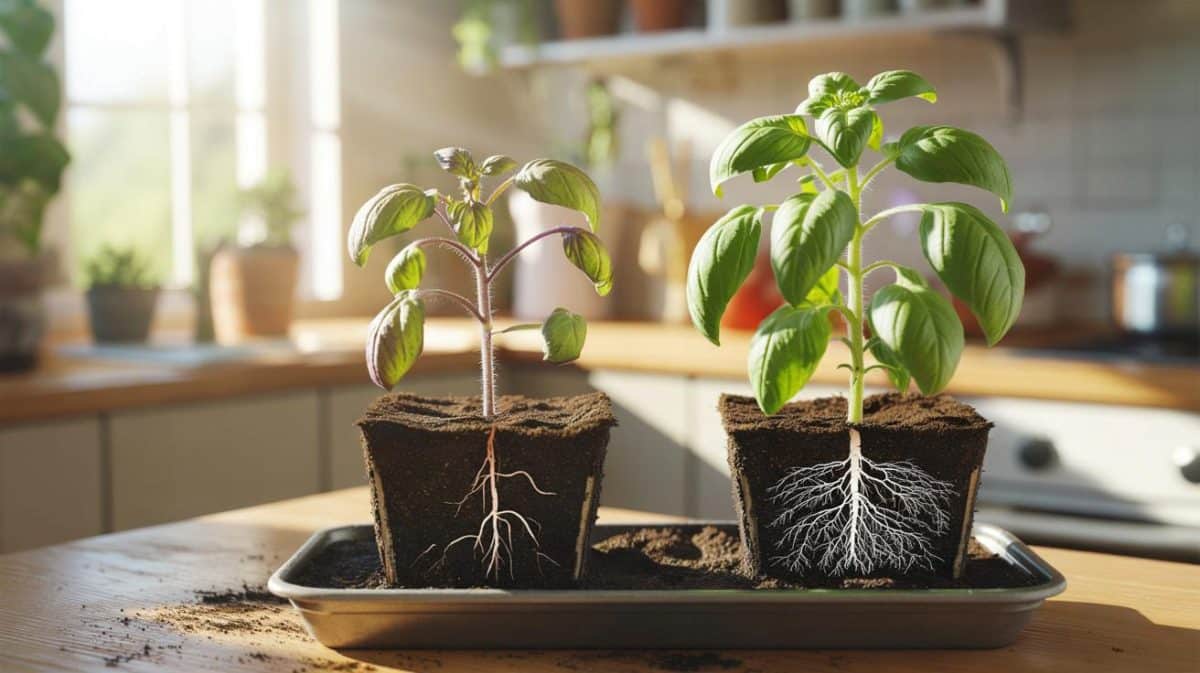
The roots formed a tight little disc, exactly the shape of the original pot, sitting like a saucer just below the surface.
That’s the trap. When plants are set at the wrong depth, the transition from container to soil never fully happens. Too shallow, and the root zone bakes and dries fast, so roots hover near the surface, afraid to explore. Too deep, and the stem tissue sits in heavy, damp soil, where it isn’t designed to live, risking rot and suffocation. **Planting depth acts like an invisible ceiling or basement for roots**, silently telling them “stop here” long before they reach their real potential.
How deep is “right” when every plant is different?
The most reliable rule is almost boring: put the plant in the ground at the same level it was in the pot or nursery bed. That faint soil line on the stem is gold. For trees and shrubs, look for the root flare, that small, gentle swelling where roots start branching out from the trunk. That flare should sit slightly above the final soil surface, not buried.
For most vegetables and flowers, the top of the root ball should end up flush with the surrounding soil, not sitting on a little mound, not sunk in a crater.
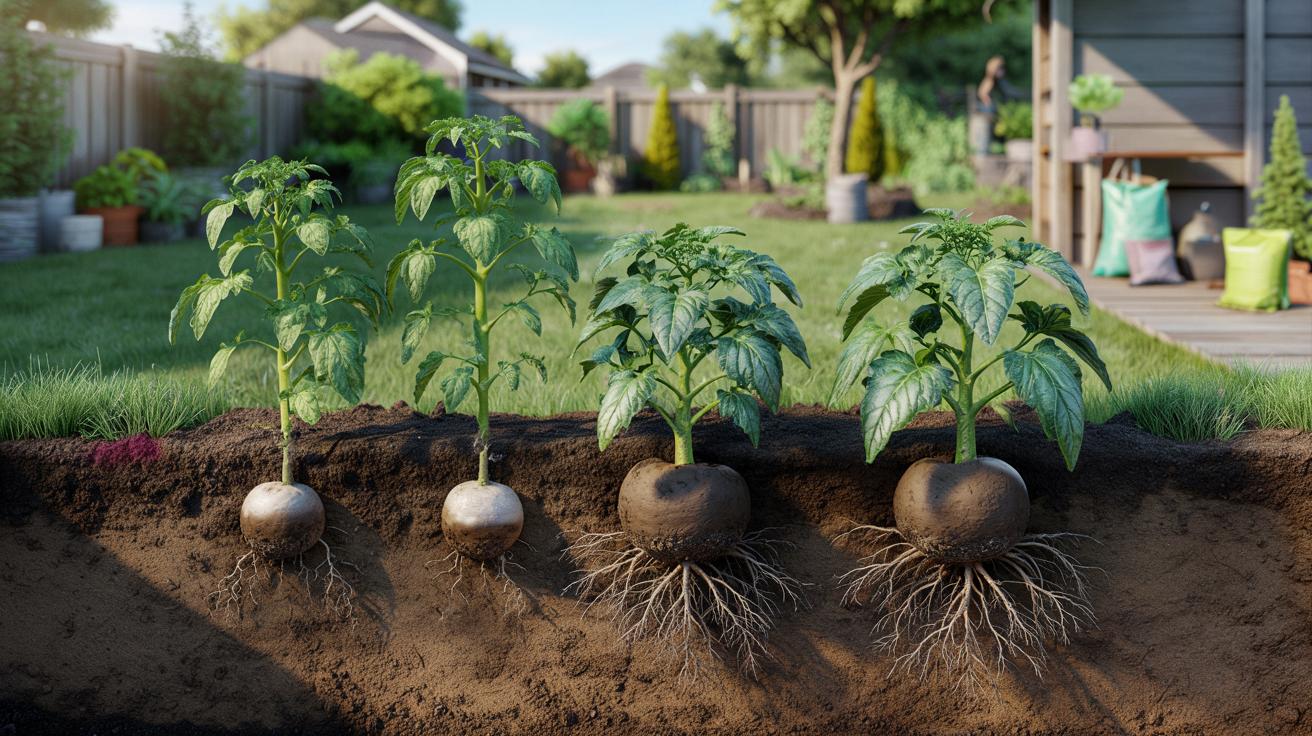
Tomatoes are the popular exception everyone loves to mention, because they can grow roots from their buried stems. You can safely plant tomatoes deeper or even sideways in a trench so they root along the stem. But try that with peppers or woody shrubs and you’re inviting stem rot. A simple way to reset your habit is this: place the plant in the hole, step back, and look at it from the side, at eye level with the soil.
If you can’t clearly see where the stem meets the original soil line, you’re probably off.
The science behind this is fairly simple. Roots need oxygen as much as they need water. Soil closer to the surface tends to be looser and better aerated. Go too deep and the soil is denser, especially in clay-heavy yards, so oxygen drops. When we sink plants below their natural level, we push their living tissues into zones of low air and high moisture. Over time, that means slow growth, weak anchoring, and random dieback that looks like “mystery disease”. **Most of the time, it’s just physics and a slightly over-enthusiastic shovel.**
Small adjustments that free your plants underground
Next time you plant, pause before you dig. Start by loosening the area wider, not deeper, than the root ball. Think shallow bowl, not narrow cylinder. Test the depth by placing the pot into the hole before you unpot it. The top of the pot should sit level with the surrounding soil, or a finger’s width higher for trees and shrubs. Then remove the pot, tease the roots lightly so they’re not spiraling, and set the plant in.
Backfill gently, pressing with your fingertips, not your full weight, so you don’t compact the soil into concrete.
A lot of gardeners unconsciously “tuck in” plants like they’re putting a child to bed, piling soil a bit higher around the base as a show of care. That soft mulch you plan to add later turns into an accidental burial. Try this instead: finish planting, water deeply, then add mulch that stops a few centimeters away from the stem or trunk. Leave that little breathing circle bare.
We’ve all been there, that moment when you realize your love for a plant translated into smothering it slightly.
“Most of the root problems I see in home gardens started the day the plant went into the ground,” a seasoned nursery grower told me once. “People fuss over fertilizers and forget the basics: where the stem ends and the roots begin.”
➡️ This financial habit helped me feel in control even during uncertain months
➡️ This is why doing “one more thing” often backfires
➡️ People who feel pressure to stay emotionally available often skip emotional recovery
➡️ Why saving money feels easier once goals are clearly defined
➡️ The daily behaviors that keep your body in tension mode
➡️ “I always come back to this recipe when nothing else sounds right”
➡️ The cleaning habit that makes guests think your home is always tidy
➡️ This warm, filling recipe is perfect when the weather turns cold
- Check the root flare on trees and shrubsGently brush soil away until you see the flare. If you can’t find it, the plant may already be buried too deep in the container mix.
- Use a hand trowel as a rulerNote a reference mark on your trowel so you stop digging once you reach the right depth instead of eyeballing it in a rush.
- Plant in firm, not compacted, soilBackfill, then tug the plant lightly. If it slides up, firm the soil a bit more. If it feels like it’s in concrete, you pressed too hard.
What changes when you finally get depth right
When planting depth matches what the plant actually needs, the whole rhythm of the garden shifts. Roots start pushing sideways, not just down, exploring that freshly loosened soil like scouts. Plants ride out heat waves better because their root systems sit in a zone that balances moisture and air. You notice less drooping at midday, even when you haven’t watered yet.
Some plants you’d quietly written off as “weak varieties” suddenly behave like the catalog promised.
You also start to read your soil with more nuance. Instead of blaming every yellowing leaf on a missing nutrient, you remember to ask: how did I set this plant in the first place? Over time, your eye gets sharper. You spot a tree planted like a fence post, sunk too deep, and you feel that little twinge in your chest because you know its future. *Once you’ve seen the pattern, you can’t unsee it.*
This isn’t about perfection or measuring every hole with a ruler. Let’s be honest: nobody really does this every single day. It’s about shifting the default from “pot-deep and quick” to “root-aware and curious”. When you do, the garden starts feeling more cooperative, less like a puzzle full of random failures. **The plants haven’t changed. You just stopped quietly capping their roots with a mistake you didn’t know you were making.**
| Key point | Detail | Value for the reader |
|---|---|---|
| Spot the correct planting depth | Use the original soil line or root flare as a visual guide instead of guessing | Reduces hidden stress on plants and prevents slow, unexplained decline |
| Dig wide, not deep | Prepare a shallow, broad planting area so roots can spread easily | Encourages stronger anchoring and better drought resistance |
| Keep stems and trunks above heavy soil | Avoid burying stems or covering the root flare with soil or mulch | Lowers risk of rot, dieback, and early tree or shrub failure |
FAQ:
- Question 1How can I tell if a plant in my garden is planted too deep?
- Question 2Can I fix the depth of a tree or shrub that was planted years ago?
- Question 3Are there any vegetables that actually like being planted deeper?
- Question 4What happens if my plants are too shallow instead of too deep?
- Question 5Is planting in raised beds different when it comes to depth?