The first time I told a friend I worked as a “delivery planner,” he assumed I rode a bike all day and earned minimum wage plus tips.
We were at a noisy bar, and I watched his face shift from polite interest to mild pity as he asked, “So… is it enough to live on?”
I laughed and slid the number across the table on my phone screen. His eyebrows shot up.
My yearly salary. The bonus range. The stock options.
“Wait. For planning routes?” he said, like I had just revealed I get paid six figures to play Tetris.
That’s the thing: people see the driver at the door, not the invisible work behind the scenes.
Yet every parcel that lands on a doormat on time has passed through someone’s brain and spreadsheet.
And quite often, that brain is paid far better than people imagine.
What “delivery planning” really looks like when you’re inside the system
On paper, I coordinate delivery routes and capacity for a logistics company.
In reality, I spend my days balancing a messy mix of traffic data, human fatigue, fuel prices, and customers who want everything yesterday.
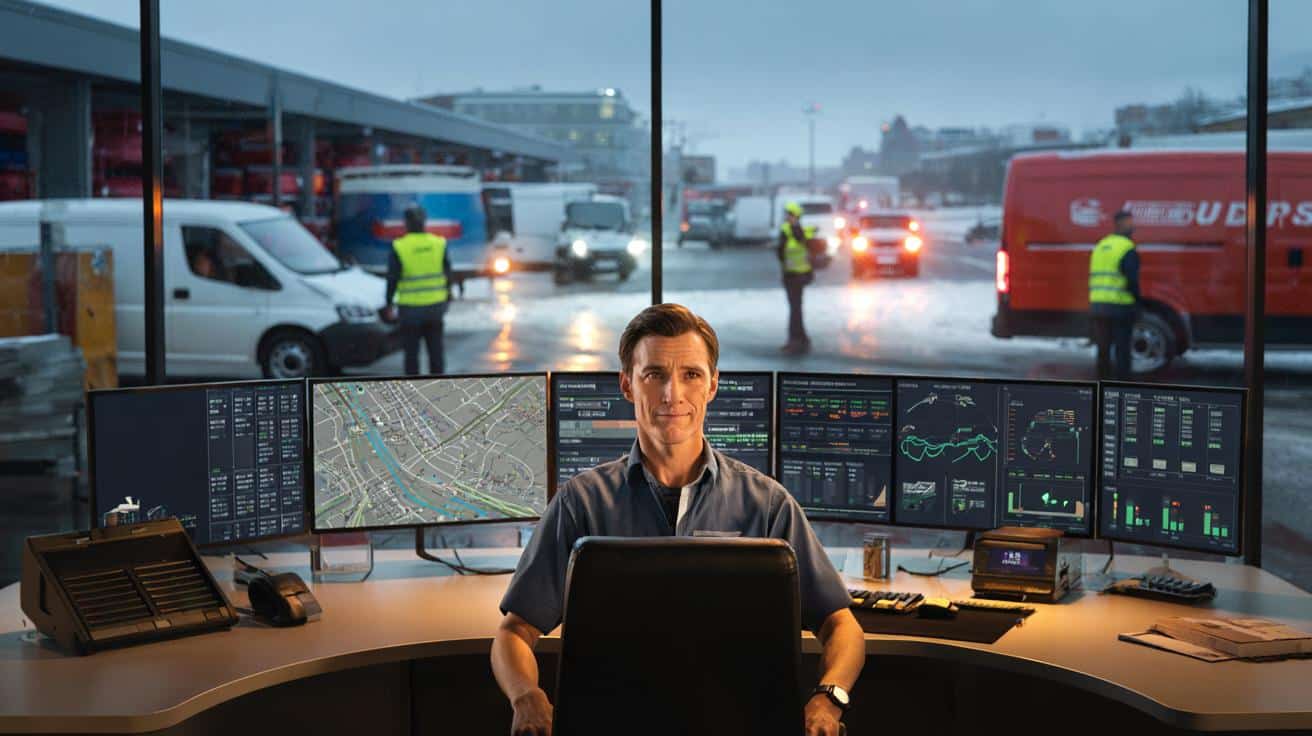
My screen is usually split like a control tower: maps on one side, dashboards on the other.
I’m staring at waves of orders changing by the minute and trying to keep real people from burning out on the road.
It sounds abstract until you realize a poor decision at 9 a.m. can mean a driver still working at 10 p.m.
That’s the weight of the job.
And also why the pay quietly climbs far higher than the public thinks.
One Monday last winter, a snowstorm hit the city earlier than forecast.
We had hundreds of parcels already loaded and drivers about to leave the depot.
On my screen, I watched estimated travel times double in twenty minutes.
If we did nothing, we’d have overtime, missed slots, complaints, and drivers stuck on icy roads in the dark.
➡️ “I felt restless after sitting all day”: the signal I ignored for too long
➡️ The cleaning habit that makes guests think your home is always tidy
➡️ “I cleaned my house thoroughly but forgot the one thing guests notice”
➡️ The one cleaning task that makes all the others easier if you do it first
➡️ Over 65? This simple change in your evening routine can reduce nighttime anxiety
➡️ People who feel uneasy being taken care of often value independence deeply
➡️ This planting depth mistake silently limits root expansion in most home gardens
➡️ The daily behaviors that keep your body in tension mode
I pulled three levers: I cut low-priority deliveries, re-clustered routes around cleared main roads, and called in a couple of standby vans we rarely use.
By the end of the day, we hit 93% of time windows and cut the expected overtime bill almost in half.
A manager pulled me aside the next day: “You saved us thousands yesterday.”
That’s when you understand why a “desk job with maps” can quietly lift you into a different pay bracket.
Companies pay delivery planners well because the stakes are brutally clear.
One sloppy week of planning can wipe out months of profit on a route.
Every extra mile driven costs fuel, vehicle wear, and driver time.
Every late delivery risks a bad review, a discount, or even losing a major client.
When someone can take messy, real-world chaos and turn it into routes that work in real life, not just in software, that person becomes very hard to replace.
So salaries creep up, bonuses get added, and there are performance incentives most people never hear about.
Plain truth: a good delivery planner can be worth more to a company than a shiny marketing campaign.
They just sit in a quieter office.
How the money actually works when you’re a delivery planner
The question everyone finally asks, often with a guilty smile, is: “Okay, but what do you actually earn?”
Where I live, junior planners start near the upper end of entry-level corporate jobs, especially compared to retail or customer service roles.
The real jump happens after a couple of years.
Once you can manage a region on your own and hit performance targets, bonuses start to matter.
You’re not being paid for keystrokes; you’re being paid for shaving five minutes off a route without breaking labor rules.
At my level, I’m in a solid middle-class bracket, with a yearly bonus tied to delivery success, failed-delivery rate, and route efficiency.
The driver might be the visible face of the service.
But a big slice of the money flows to the people who keep the whole system from collapsing during Christmas week.
People often think you need a fancy degree to get into this type of job.
What you really need is a blend of logistics curiosity, basic data comfort, and a stomach for pressure.
I started with a mid-range operations role, doing basic scheduling.
I volunteered for every project that involved routes, mapping tools, or performance dashboards.
I asked dispatchers dumb questions, sat with drivers during their breaks, listened to their tricks for beating traffic.
When a planner left, I was the annoying person who already knew half the tools.
That’s how I moved into planning and started touching the bonus structure.
The path isn’t glamorous, but it’s more accessible than people think, especially if you’re not afraid of numbers or shift work at the beginning.
Delivery planning pays well because it solves expensive, recurring headaches.
The margin on a single parcel can be tiny.
Send a van out half full, and you kill that margin.
Fail to account for traffic around a stadium on game day, and your whole evening wave collapses.
Companies are willing to pay a strong planner because the alternative is far more costly than a higher salary.
This is one of those fields where the better you are, the more measurable your impact.
That’s rare in many office jobs, where nobody can really say what their work is worth at the end of the month.
Here, if you cut average route distance by 8%, you can literally see the fuel bill drop.
Skills and habits that quietly boost your paycheck in this role
The first thing that made a difference to my salary wasn’t a certificate.
It was learning to speak both languages: driver language and manager language.
With drivers, I talk about time, fatigue, parking nightmares, school zones, dead-end streets.
With managers, I talk about KPIs, cost per drop, service levels, and client churn.
When you become the bridge between those two worlds, your value rises fast.
You stop being “the person who clicks routes” and start being the person who explains why a certain area bleeds money on Tuesdays.
If you like puzzles and people, delivery planning quietly rewards you.
Not overnight, but definitely on payday.
The biggest mistake I see new planners make is trusting the software blindly.
Route optimization tools are powerful, but they don’t know about the alley that’s always blocked by a market stall or the building with the eternally broken elevator.
We’ve all been there, that moment when a “perfect” route on-screen dies the second the van hits the first closed street.
Driven purely by software, your days turn into firefighting and apologizing.
The other common trap is ignoring drivers’ feedback because “the data says it’s fine.”
Drivers remember the patterns the system misses: the school run that blocks a whole suburb, the security gate that always takes ten minutes.
Let’s be honest: nobody really walks the full route before approving it every single day.
But the planners who listen actively, tweak consistently, and keep human reality inside the algorithm usually end up with better performance… and better raises.
One of the senior planners I worked with summed it up perfectly:
“Good planning is when a driver doesn’t think about your route at all.
Great planning is when they get home earlier and don’t even know it was because of you.”
He showed me a simple checklist he used every morning before finalizing routes.
I ended up adopting it and tweaking it to my own style:
- Quick scan of weather, local events, and roadworks for each major area.
- Check yesterday’s failed deliveries and see which addresses keep reappearing.
- Re-balance any route that has more than 10% higher volume than the average.
- Call or message one driver from a “problem area” and ask, “What annoyed you yesterday?”
- Lock the plan only after a final sanity check: “Would I survive this route?”
It looks basic.
Used daily, it quietly shaves minutes, miles, and complaints off the system.
Why these “invisible” jobs might be the quiet winners of the next decade
There’s a strange gap between how people talk about delivery work and where the money actually flows.
Everyone pictures gig drivers racing against the clock, and that’s a real, often underpaid reality.
Behind that, there’s a layer of operational brains quietly earning steady, sometimes generous salaries, with regular hours and career paths.
Delivery planning sits right in that layer.
As e-commerce grows, the pressure to deliver fast and cheap isn’t going anywhere.
The tech will evolve, vans might get smarter, maybe drones will buzz overhead one day.
But someone will still need to decide how to turn thousands of addresses into workable days for human beings.
That mix of math, empathy, and problem-solving is not going out of style.
If you like numbers, logistics, and the idea of making the chaotic world of deliveries just a bit more humane, this might be one of those under-the-radar careers that quietly changes your bank account.
And maybe, next time someone asks what you do, you won’t downplay it quite so much.
| Key point | Detail | Value for the reader |
|---|---|---|
| Delivery planners earn more than people think | Solid base salary + performance bonuses tied to route efficiency and service levels | Shows that logistics roles can offer stable, well-paid careers beyond driving |
| Skills matter more than fancy degrees | Mix of basic data skills, real-world street knowledge, and communication with drivers and managers | Opens a realistic entry path for readers from retail, warehouse, or support jobs |
| Impact is measurable and rewarded | Better planning reduces fuel, overtime, and failures in ways companies can track | Helps readers see how to “prove” their value and negotiate better pay |
FAQ:
- Question 1Do you need a university degree to become a delivery planner?
Not always. Many companies accept candidates with solid experience in operations, dispatch, or customer service, plus basic data and Excel skills. A degree in logistics or business helps, but isn’t the only door.- Question 2How much can a delivery planner realistically earn?
It varies by country and company, but in many mid-sized cities the total package sits above typical retail or office admin roles, especially after a few years, thanks to bonuses and progression to senior planner or regional roles.- Question 3Is the job really stressful?
There are intense moments, especially around peak seasons or during weather disruptions. You’re responsible for decisions that affect dozens of people’s days, yet with experience and good tools the stress becomes more about problem-solving than constant panic.- Question 4What tools do delivery planners actually use?
Route optimization software, mapping tools, spreadsheets, and internal dashboards are the basics. Some companies layer on demand forecasting systems and driver apps that feed back real-time data.- Question 5Can this role lead to other careers?
Yes. Many planners move into operations management, network planning, supply chain analysis, or even product roles at logistics tech companies. The experience is a strong foundation for any job that touches movement of goods.