You open the fridge, hunting for something to snack on, and there it is again.
That faint, stubborn smell that hits you before the cold air even does.
It’s not rotten-food-disaster level, but it’s… off. A mix of last week’s onions, leftover curry, and some mystery cheese that’s slowly becoming a new life form. You push a jar, rearrange a yogurt, maybe wipe a corner with a paper towel and close the door fast, pretending it’s gone.
Ten minutes later, you open it again. Same smell. Same little wave of guilt.
And the box of baking soda everyone swears by? You don’t have one.
There’s a faster, quieter trick hiding in your kitchen already.
The real reason your fridge smells like “almost cleaned”
Most fridges don’t smell bad because they’re filthy. They smell bad because they’re living in that grey zone between clean and chaotic. Little leaks of sauce, half-covered dishes, that onion you “wrapped” in the store bag — all of that slowly perfumes the air.
The cold doesn’t kill the smell. It just slows everything down.
So, day after day, those invisible little particles cling to the plastic walls, the gasket, the drawers. The result is this vague, stale scent that never quite goes away.
You can usually trace it back to one or two culprits. A cucumber forgotten in the crisper, melting into a green puddle. A piece of fish wrapped in cling film that never really sealed. One family I spoke to swore they cleaned their fridge every two weeks, but still had a “weird dairy smell.” The villain turned out to be a yogurt that had exploded silently at the back, then dried.
They’d been spraying the shelves, but not the rubber seal around the door, where some of the yogurt had seeped in.
Tiny detail, big smell.
Smell lives in layers. First, there’s the obvious layer: visible spills, open food, forgotten leftovers. Below that, you get the “memory” of smells soaked into plastic, cardboard packaging, even the ice box.
When those molecules pile up, cold air just circulates them like a fan.
Baking soda absorbs part of that, yes. But without touching the source, you’re basically putting a scented bandage on a slow leak. *The real trick is to neutralize and trap odors right where they start, every single day, without turning it into a chore.*
➡️ The cleaning habit that makes guests think your home is always tidy
➡️ This slow oven-baked dish fills the house with the most comforting smell
➡️ The one cleaning task that makes all the others easier if you do it first
➡️ The hidden reason young plants struggle even when temperature and light seem perfect
➡️ This simple savory bake delivers deep flavor with minimal effort
➡️ “I work as a delivery planner, and this role pays much better than people imagine”
➡️ “I cleaned my house thoroughly but forgot the one thing guests notice”
➡️ “I couldn’t understand why my sink smelled until I cleaned this hidden part”
The quick trick: a lemon-and-vinegar combo smarter than baking soda
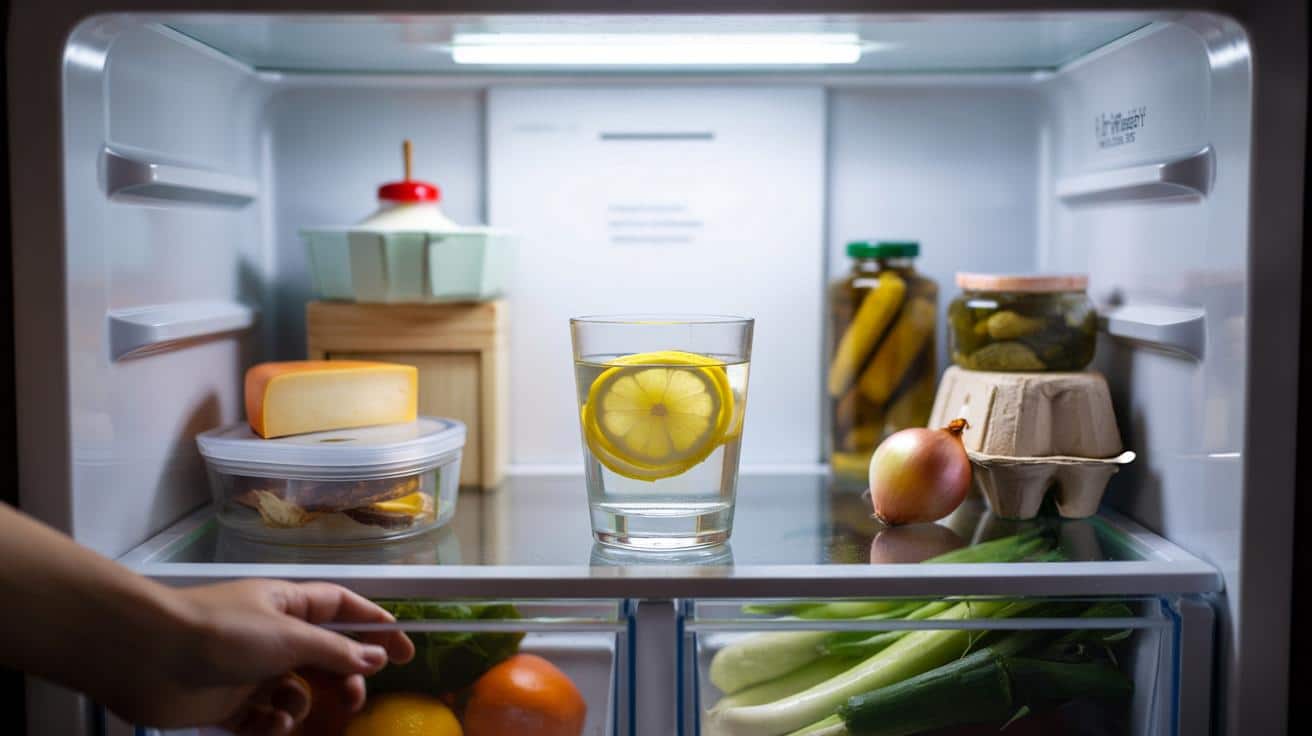
Here’s the shortcut: a simple, small glass or bowl with white vinegar and lemon slices, quietly working in a corner of your fridge. Not a giant cleaning session. Not a full reorganization. Just a tiny ritual that takes 30 seconds.
Pour a bit of white vinegar into a small cup, then add two or three slices of fresh lemon. Place it, uncovered, on a stable shelf, away from where things get knocked around.
The vinegar neutralizes and traps smells, while the lemon lightly perfumes the air so the fridge doesn’t feel like a pickling jar.
Most people either go “all in” on cleaning day or do nothing at all. Let’s be honest: nobody really does this every single day. That’s why this trick works so well. It doesn’t need your constant attention.
You change the mixture once a week, or when the lemon looks sad and dried. That’s it.
No scrubbing, no expensive deodorizing packs, no weird perfumed products that make your cheese smell like synthetic flowers.
“Since I started using the vinegar and lemon glass, my fridge smells… of nothing,” laughs Ana, a 34-year-old nurse who often forgets leftovers. “Before, I’d open the door and get this wave of ‘what did I cook last month?’ Now the air is just neutral. It feels cleaner, even when I know I haven’t done a full scrub in a while.”
- Use a small, stable container so it doesn’t spill when you move things around.
- Change the lemon slices regularly so they don’t become another source of smell.
- Avoid placing the glass in the door where it’s more likely to tip over.
- Combine this with covering strong-smelling foods (onions, cheese, fish) for maximum effect.
- For a “shock treatment”, wipe a shelf with a 50/50 vinegar–water mix before placing your little glass.
From quick fix to quiet habit
Once you’ve got your little vinegar-and-lemon corner working for you, the whole relationship with your fridge shifts a bit. You don’t dread opening the door as much. Your leftovers don’t feel like hidden time bombs. You’re more likely to actually eat what you store because it doesn’t smell like a science experiment in there.
This tiny gesture often triggers others: closing containers properly, wrapping strong-smelling foods, throwing out that lettuce that died three days ago. Not out of guilt, but because the clean, neutral air invites you to keep it that way.
We’ve all been there, that moment when you open someone else’s fridge and think, “Wow, this smells… of nothing.” It feels oddly luxurious. The truth is, that “nothing” is built from tiny, repeatable moves, not heroic spring cleanings.
And maybe that’s the quiet power of this trick. It respects how people really live: busy, distracted, doing their best. A small glass, a bit of vinegar, a few lemon slices — and the sense that your kitchen is under control, one cold breath at a time.
| Key point | Detail | Value for the reader |
|---|---|---|
| Quick deodorizing trick | Glass of white vinegar with lemon slices in the fridge | Neutralizes bad smells without baking soda or chemicals |
| Low effort, high impact | 30 seconds to set up, weekly change | Fits real-life routines without demanding big cleaning sessions |
| Better fridge habits | Encourages covered food, cleaner shelves, less waste | Fresher food, fewer odors, and a more pleasant kitchen |
FAQ:
- Question 1Can I use apple cider vinegar instead of white vinegar?Yes, but white vinegar works best because its smell fades faster and it’s cheaper. Apple cider vinegar has a stronger, fruitier scent that can mix oddly with certain foods.
- Question 2How often should I change the vinegar and lemon?Once a week is ideal. If you’ve had a big “smell event” (like fish leaking or something rotting), change it sooner after a quick wipe-down.
- Question 3Will my food taste like vinegar or lemon?No. The vinegar and lemon are there to absorb and neutralize odors, not to perfume your food. As long as containers are closed, your food will keep its own flavor.
- Question 4Do I still need to clean the fridge sometimes?Yes. This trick extends the “fresh” feeling and slows down odors, but spilled milk or rotting vegetables still need actual cleaning.
- Question 5Where’s the best place to put the glass in the fridge?Place it on a middle shelf, towards the back, where air circulates but it’s less likely to be bumped or spilled when you grab things.