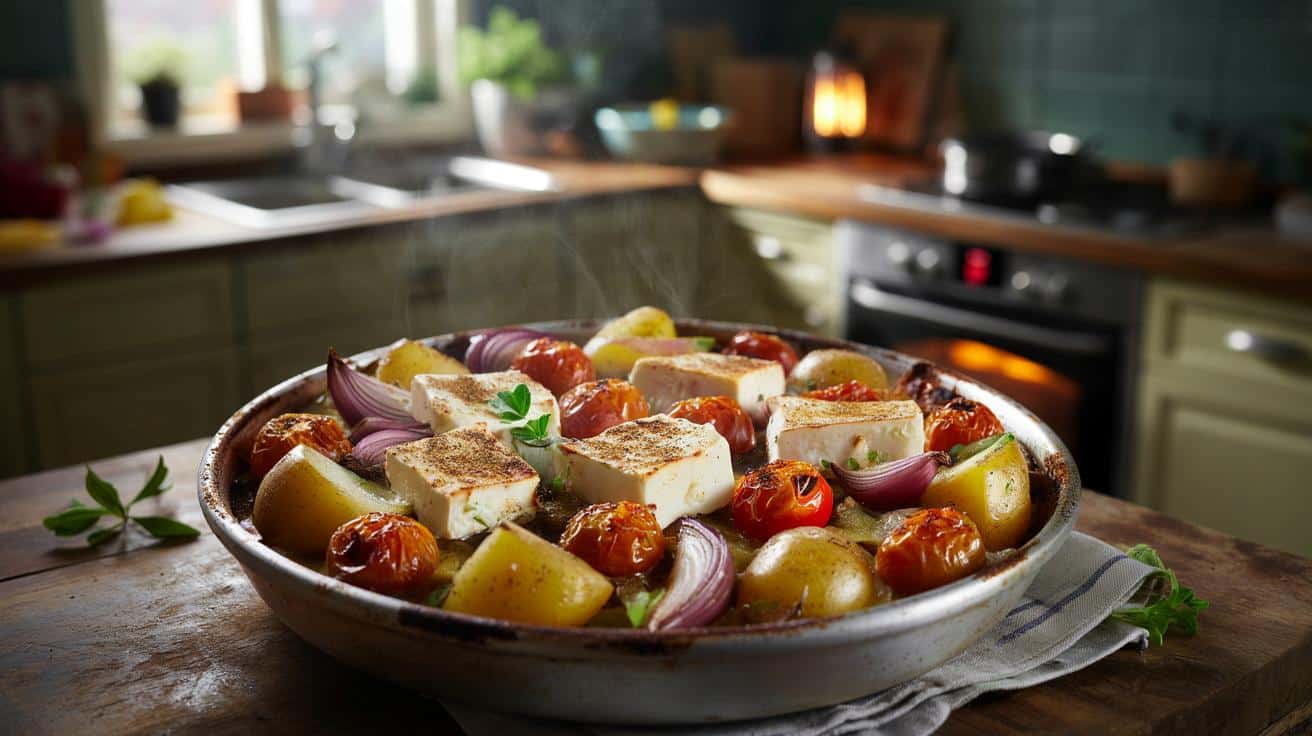
The timer on the oven blinked lazily from the corner of the tiny kitchen, casting a faint orange glow over a sink full of dishes that nobody really wanted to deal with. Outside, the street was already dark, that deep weekday dark where you can almost feel the emails you haven’t answered yet. A single baking dish sat on the counter, onions and tomatoes slumping into each other, a scatter of herbs looking almost careless.
Twenty minutes later, the room changed. The kind of smell that makes everyone wander in and ask, “What are you cooking?” even though it’s obviously right there, bubbling away. You didn’t hover, you didn’t whisk, you didn’t knead.
You just slid the dish in the oven and let time do its quiet magic.
This is how a simple savory bake quietly saves your evening.
The quiet power of a one-dish savory bake
There’s a particular relief that comes from knowing dinner is basically solving itself in the oven. You chop a few things, toss them with oil and seasonings, spread them in one pan, and walk away. No juggling three pans on the stove. No last-minute panic when the rice, the sauce, and the vegetables all demand your attention at once.
A savory bake turns a pile of humble ingredients into something that tastes like you tried much harder than you actually did. It feels like cheating, but in the gentlest, most delicious way.
Picture this. It’s Thursday, your brain is fried, and the only thing in the fridge is a chaotic mix of odds and ends. A few potatoes. Half a red onion. Some cherry tomatoes you forgot about. A block of feta that looks like it’s judging you from the back corner.
You cut everything into chunky pieces, drizzle on olive oil, throw garlic cloves in whole, and crumble the cheese over the top. A pinch of dried oregano, a lazy grind of pepper, and the whole thing goes into a hot oven.
By the time you’ve answered two messages and scrolled mindlessly for ten minutes, dinner smells like a Mediterranean holiday.
What’s happening in that pan is small-scale kitchen alchemy. High heat coaxes sweetness from onions and carrots, turns tomatoes into jammy pockets of flavor, and gives potatoes those golden, crispy edges everyone fights over. Fat from cheese or sausage mingles with olive oil and seasoning, creating its own built-in sauce.
➡️ “I cleaned my house thoroughly but forgot the one thing guests notice”
➡️ This slow-cooked recipe turns time into flavor
➡️ “I work as a delivery planner, and this role pays much better than people imagine”
➡️ The cleaning habit that makes guests think your home is always tidy
➡️ The one cleaning task that makes all the others easier if you do it first
➡️ People who feel uneasy being taken care of often value independence deeply
➡️ Over 65? This simple change in your evening routine can reduce nighttime anxiety
➡️ The hidden reason young plants struggle even when temperature and light seem perfect
You’re not just cooking food. You’re concentrating flavors, condensing effort, and outsourcing most of the hard work to time and temperature. A savory bake is the rare kind of recipe where doing less actually gives you more.
The simple method that makes it taste like you cooked all day
The core gesture behind a good savory bake is almost ridiculously simple: cut, coat, and crowd everything into one dish. Start with a base that can handle long heat, like potatoes, root vegetables, or sturdy greens. Toss them in a generous amount of olive oil and salt, then add your flavor boosters: garlic, onions, spices, maybe a squeeze of lemon.
Layer your protein on top if you’re using one—chicken thighs, sausages, chickpeas, or firm tofu work well. Finish with something that will slowly melt or brown, like feta, mozzarella, or grated Parmesan.
Then the most important step: leave it alone.
Most people trip up in the same places, and none of it is about skill. They cut vegetables too small, so they dry out before they get tender. They use too little oil, afraid of the calories, and end up with pale, sad ingredients welded to the pan. Or they keep opening the oven door every five minutes, poking and stirring until all the heat escapes.
Let’s be honest: nobody really does this every single day. We rush, we compromise, we microwave leftovers. That’s exactly why a low-effort, high-reward bake feels so comforting when we actually do it.
*Give the ingredients room, give them fat, give them time.*
Sometimes the best-tasting dinners are the ones where you did the least and trusted the oven the most.
- Cut in bigger chunks
Chunky pieces stay juicy inside while the edges caramelize. Think large wedges, not tiny dice. - Use enough oil
A light but visible gloss on every piece helps browning, prevents sticking, and carries flavor. - Go heavy on seasoning
Bakes dull out timid seasoning. Salt, herbs, spices, acid: be slightly braver than you think. - Crowd the pan on purpose
A snug dish lets juices mingle, creating that deep-flavored, almost saucy bottom layer. - Finish with contrast
Think fresh herbs, lemon zest, or a spoon of yogurt at the end to brighten all that roasted richness.
A dish that fits into real life, not the other way around
What makes this kind of savory bake quietly powerful isn’t just the taste. It’s the way it bends around your actual life. You can throw it together between Zoom calls, set a timer, and step away. You can prep the dish in the morning, leave it covered in the fridge, and slide it straight into the oven when you walk through the door.
It turns “I have nothing for dinner” into “I have a plan” with almost the same ingredients.
We’ve all been there, that moment when you stare at your fridge and feel more tired than hungry. A simple bake doesn’t ask you to be creative, or disciplined, or particularly organized. It just asks you to commit to one pan and a little patience.
And when you sit down with a plate full of roasted edges and soft centers, the day suddenly feels less heavy, even if nothing else has changed.
| Key point | Detail | Value for the reader |
|---|---|---|
| One pan, deep flavor | All ingredients roast together, sharing juices, fat, and seasoning | Restaurant-level taste with almost no active cooking |
| Flexible ingredients | Works with leftover vegetables, simple proteins, and pantry spices | Reduces food waste and saves an extra grocery run |
| Hands-off cooking | Prep in minutes, then let the oven do the rest | Frees time for rest, family, or anything that isn’t stirring a pot |
FAQ:
- Question 1How hot should the oven be for a good savory bake?
Aim for 200–220°C (400–425°F). That range is hot enough to brown and caramelize without burning the outside before the inside is tender.- Question 2Can I make a flavorful bake without meat?
Yes. Use chickpeas, white beans, or firm tofu for protein, add hearty vegetables like potatoes or squash, and rely on spices, garlic, and cheese (or nutritional yeast) for depth.- Question 3Why does my bake sometimes turn watery?
This often happens with very watery vegetables like zucchini or tomatoes packed too tightly. Use a larger dish, cut them in bigger chunks, and roast a bit longer so excess liquid reduces.- Question 4Can I assemble the dish ahead of time?
You can prep and refrigerate it for several hours. If it’s very cold from the fridge, add a few extra minutes to the baking time so everything heats through properly.- Question 5What’s an easy flavor combo to start with?
Try potatoes, red onion, cherry tomatoes, garlic, olive oil, salt, pepper, oregano, and crumbled feta on top. Bake until golden and bubbling, then finish with a squeeze of lemon.