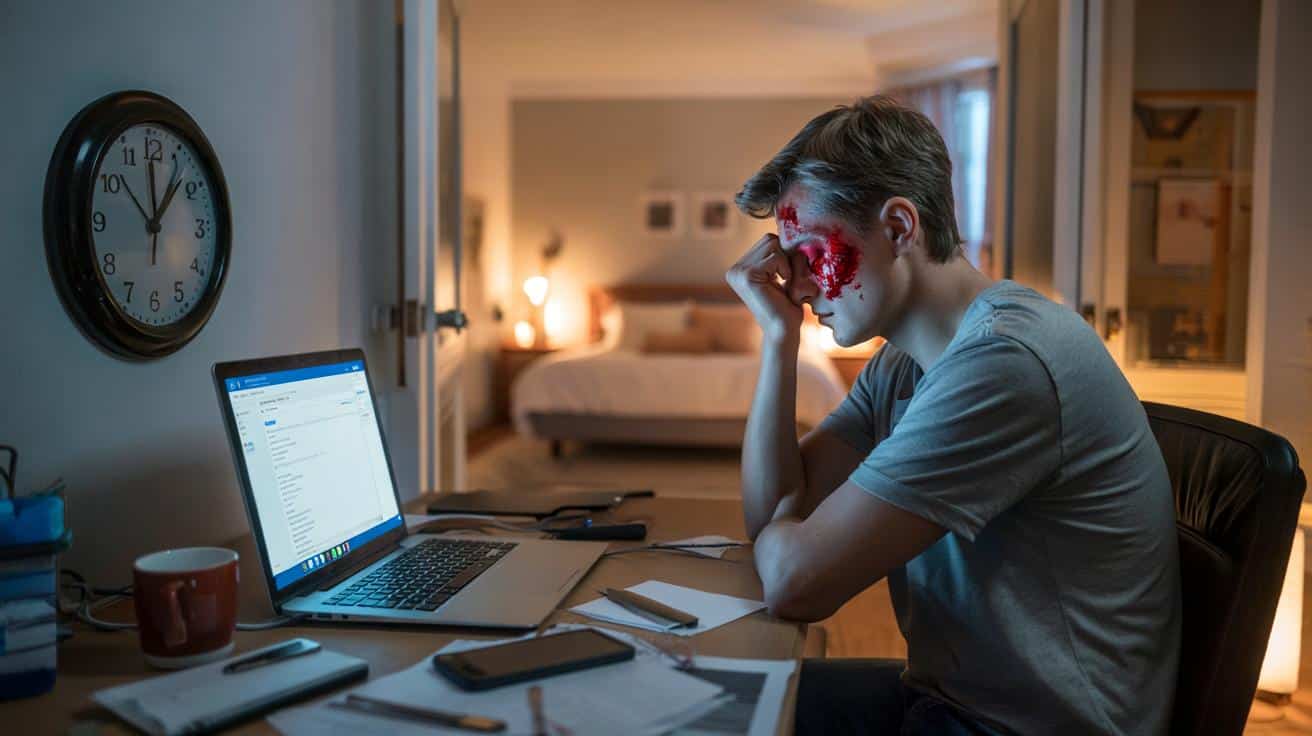
You glance at the clock. 11:08 p.m.
Laptop still open, brain buzzing, you tell yourself the same little lie: “I’ll just do one more thing, then I’m done.”
You answer one more email.
You tweak one more slide.
You scroll one more minute that somehow turns into twenty.
The room is quiet, your eyes sting, but you ride that small wave of guilt-fueled productivity. You feel oddly proud of squeezing a few more drops out of the day. Then the alarm rings the next morning and you pay the bill.
The day after that, you pay again.
The truth is, that tiny final push we worship so much often costs more than it gives.
Why “one more thing” feels smart in the moment
There’s a rush that comes with squeezing in that extra task.
You feel like the version of yourself you wish you were all the time: focused, responsible, just disciplined enough to keep going when others would stop.
That feeling is addictive.
It’s a quick hit of competence, especially when the rest of the day felt scattered or messy.
*The story we tell ourselves is simple: one more thing equals one more step ahead.*
We rarely ask what we’re silently trading away in the background.
Picture this: you’re about to leave the office. Bag on your shoulder, coat on.
A coworker pings you: “Can you quickly look at this?”
You sit down again “for five minutes”.
You rewrite half their document, send three more messages, check tomorrow’s calendar, then notice a Slack thread you somehow missed.
➡️ This simple savory bake delivers deep flavor with minimal effort
➡️ This quick trick keeps your fridge from smelling bad without baking soda
➡️ The one cleaning task that makes all the others easier if you do it first
➡️ The cleaning habit that makes guests think your home is always tidy
➡️ People who feel pressure to stay emotionally available often skip emotional recovery
➡️ “I always come back to this recipe when nothing else sounds right”
➡️ Gardeners who leave small imperfections see fewer long-term problems
➡️ Why saving money feels easier once goals are clearly defined
Forty minutes gone.
On the commute, you’re scrolling instead of decompressing. Home feels rushed. Dinner is late, sleep is later. The next morning, you’re a bit slower, so you stay a bit later again.
That small, innocent “yes” didn’t just add one more thing.
It extended the whole day’s shadow.
Psychologists call this time optimism: the stubborn belief that future-you will somehow be faster, fresher, and less interrupted than present-you.
So when we say “one more thing”, we treat time like an elastic band.
We forget that attention doesn’t reset instantly.
Every extra task keeps your brain in “on” mode longer, which messes with your ability to unwind, sleep, and focus the next day.
Let’s be honest: nobody really does this every single day without consequences.
That one last push chips away at your reserves, and the bill usually arrives when you’re facing something that actually matters.
How to stop before “one more thing” ruins your day
A simple trick: decide your last action of the day in advance.
Not the last time on the clock, the actual last action.
For example: “My day ends when I write tomorrow’s top three tasks on a Post-it.”
Or: “My day ends when I close my laptop and put my phone in the hallway.”
This creates a clear line in your brain.
Once that action is done, anything that comes after is tomorrow’s problem.
It sounds almost too simple.
Yet that tiny ritual gives you something powerful: permission to stop without negotiating with yourself every night.
The biggest trap is telling yourself, “It’s just a quick thing.”
Your brain underestimates the time, and forgets the recovery cost completely.
One email rarely means one email.
You open your inbox and stumble into decisions, worries, and side quests you didn’t plan.
Try swapping the question “Can I fit this in?” for “What will this push out?”
Sometimes the answer is sleep.
Sometimes it’s a real conversation at home.
Sometimes it’s the 20 quiet minutes your mind needed to unclench.
You’re not lazy for stopping.
You’re just refusing to hide tomorrow’s problem inside tonight’s “quick win”.
We often praise people who “go the extra mile”, but almost never praise those who know exactly when to stop walking.
- Set a visible shutdown timePick a time when work devices go dark and alarms or app blockers kick in. Let technology take the blame instead of your willpower.
- Define a non-negotiable last stepChoose a tiny, repeatable ritual that signals “I’m done”: closing browser tabs, writing a one-line summary of the day, or laying out tomorrow’s clothes.
- Protect your transition windowKeep the 20–30 minutes after your last step free of screens and tasks. That buffer is where your nervous system shifts out of “go” mode.
- Say “tomorrow-me will handle this” out loudIt sounds silly, but giving future-you a clear assignment makes it feel less like avoidance and more like planning.
- Limit heroic nightsIf you really must push, treat it as an exception with a start and end time, not a vague “I’ll just keep going till it’s done”. Your future self is not an endless sponge.
Rethinking productivity beyond the last push
There’s a quiet kind of maturity in knowing when to stop.
Not out of laziness, but out of respect for the chain reaction that “one more thing” can trigger.
The people who seem calm, present, and strangely productive aren’t always the ones who grind the hardest.
They’re the ones who don’t spend their best energy cleaning up the mess from last night’s extra push.
You don’t need a new app or a perfect morning routine.
You need a gentler story about what progress looks like.
Sometimes real progress is closing the laptop while you still feel you could do more, and tolerating that itch.
The next time your hand hovers over “just one more email”, pause for a second.
Ask yourself: is this moving me forward… or just stealing tomorrow’s clarity?
| Key point | Detail | Value for the reader |
|---|---|---|
| Hidden cost of “one more thing” | Extra tasks extend mental activation, harming rest, mood, and next-day focus | Helps you see why late-night pushes feel productive but slow you down over time |
| Pre-deciding your last action | Choose a specific shutdown ritual that marks the true end of your day | Reduces decision fatigue and the constant inner debate about doing more |
| Shifting the key question | Replace “Can I fit this in?” with “What will this push out?” | Encourages healthier trade-offs between work, rest, and personal life |
FAQ:
- Question 1Is doing “one more thing” always bad?
- Answer 1
Sometimes that extra task genuinely helps in a crunch or gives you peace of mind. The problem starts when “one more thing” becomes a nightly habit and slowly erodes your sleep, focus, and mood. Used rarely and intentionally, it’s fine. Used all the time, it becomes self-sabotage disguised as dedication.
- Question 2What if my job expects me to always do a bit more?
- Answer 2
Many workplaces subtly reward overextension, so the pressure is real. You can still set boundaries by defining clear end-times, communicating priorities, and negotiating deadlines instead of silently absorbing everything. Protecting your limits often makes you more reliable, not less.
- Question 3How do I stop feeling guilty when I don’t do the extra task?
- Answer 3
Guilt usually comes from a story that “good” people always go the extra mile. Try reframing: you’re not skipping effort, you’re investing in tomorrow’s energy. When you notice guilt, name one concrete thing that will be better tomorrow because you stopped now.
- Question 4What if my evenings are the only quiet time I have?
- Answer 4
If nights are your focus window, you can still work then without sliding into endless “one more thing” loops. Set a hard stop, decide your last action in advance, and protect at least a short buffer for winding down before sleep.
- Question 5Are there signs that my “one more thing” habit is backfiring?
- Answer 5
Watch for chronic tiredness, irritability at home, trouble falling asleep, dreading mornings, or needing caffeine just to feel normal. Those are signals that the small nightly “wins” are costing you more than they give back.