You walk into the kitchen with heroic intentions: “Today I’m going to clean everything.”
Twenty minutes later, there are three half-finished things going on. The sink is soaking, the counter has a mysterious wet circle, there’s a pile of random objects on a chair, and you’re already tired.
You step back and the room doesn’t look cleaner. It just looks… disturbed.
There’s a reason those big cleaning sessions always feel chaotic. Most of us start in the wrong place. We spray, we scrub, we wipe, we chase crumbs around like we’re herding cats.
But there’s one boring, unglamorous task that quietly decides if the whole thing will go smoothly or turn into domestic chaos.
And almost nobody starts with it.
The invisible task that secretly controls your whole clean-up
That one task? Dealing with surfaces and “stuff” before anything else.
Not the floors. Not the dust. Not the windows. The simple, slightly tedious act of clearing and resetting surfaces.
Every counter. Every table. Every flat space that currently holds mail, mugs, Lego, folded-but-not-put-away laundry and that cable you haven’t identified since 2019.
When those spaces are crowded, every other cleaning step feels twice as heavy. You’re not just wiping a counter, you’re moving five things, wiping around them, knocking one over, then trying to remember where it goes.
When they’re clear, the rest of your cleaning almost runs on rails.
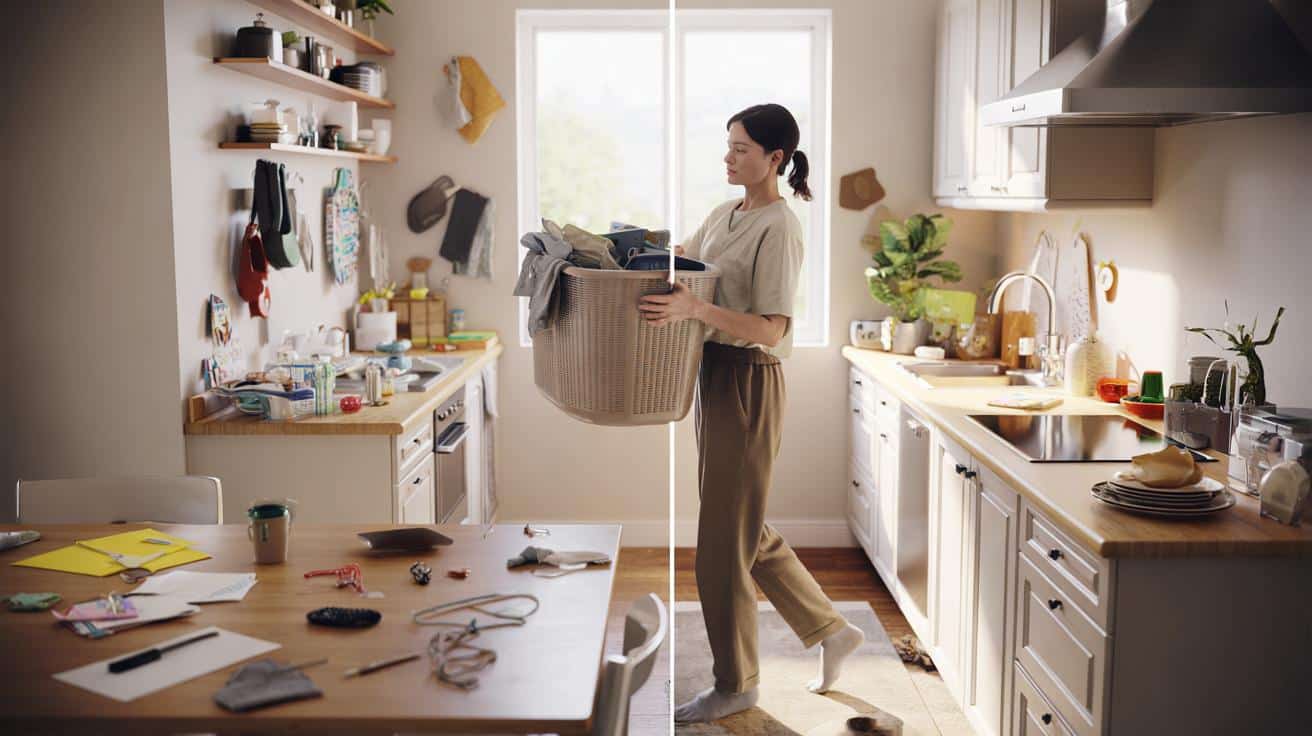
Picture two versions of the same Sunday.
➡️ This warm, filling recipe is perfect when the weather turns cold
➡️ The daily behaviors that keep your body in tension mode
➡️ Gardeners who leave small imperfections see fewer long-term problems
➡️ Over 65? This simple change in your evening routine can reduce nighttime anxiety
➡️ “I cleaned my house thoroughly but forgot the one thing guests notice”
➡️ Why saving money feels easier once goals are clearly defined
➡️ People who feel uneasy being taken care of often value independence deeply
➡️ “I couldn’t understand why my sink smelled until I cleaned this hidden part”
In the first, you start by sweeping, because those crumbs are driving you mad. Then you notice dust on the TV stand, grab a cloth, knock over a candle, and now you’re cleaning wax. You bend down to move a basket, find socks, get lost in sorting, and suddenly you’re in a decluttering spiral while the sweep is half-finished.
In the second version, you walk in and give yourself one mission: every horizontal surface gets cleared before anything else. Not cleaned. Just cleared. You grab a laundry basket or box and sweep everything loose into it: toys, mail, earbuds, receipts, hair ties.
Ten minutes later, the room looks strangely lighter. Not clean yet, but open.
And for the first time, the rest feels doable.
There’s a practical reason this works so well. Surfaces are where your eyes land first.
Psychologists talk about “visual noise” — the clutter our brain has to process before it can decide what to do. When the table, dresser and counters are covered, your brain sees twenty micro-tasks instead of one clear step. That’s when cleaning turns into procrastination, or doom-scrolling on the couch.
Clearing surfaces cuts that visual noise. Suddenly wiping becomes one movement, not five. You’re no longer constantly stopping to relocate things mid-task.
It’s like taking rocks out of the road before driving. Same journey, way less dodging.
How to do the “surface reset” first — without it taking all day
Start with one room. Not the whole home. Not “everything”. One.
Stand in the doorway and look only at flat surfaces: counters, coffee tables, nightstands, shelves you actually touch. Ignore floors for now. Ignore dust. Ignore the sink.
Grab a basket, box or even a laundry hamper and do a fast sweep: everything that doesn’t belong on that surface goes in the basket. No decisions yet. No sentimental debates with that birthday card from three years ago. Just: “Is this permanent decor or a random item?”
If it’s random, into the basket.
You’re resetting the stage so the real cleaning can happen.
This is where most people get stuck. We pick something up and instantly fall down a rabbit hole. That old bill suddenly needs sorting. A notebook begs to be reread. A single sock becomes an emergency laundry quest.
Try this instead: give yourself a time limit. Five to ten minutes per room. Put your phone in another space. Play one song and race it.
You’re not organizing. You’re not decluttering your whole life. You’re just creating clear, wipeable, usable surfaces. That’s all.
Let’s be honest: nobody really does this every single day.
But done first, even once a week, it changes how every other task feels.
Sometimes the cleanest homes don’t belong to the people who clean the longest, but to the people who know where to start.
- Clear surfaces before you touch a spray bottle.
- Use a single “catch-all” basket instead of walking back and forth.
- Decide one temporary home for that basket (bed, hallway, corner).
- Only after surfaces are reset, move on to wiping and dusting.
- Leave sorting the basket for last, or for a separate short session.
Why this one habit quietly changes how your home feels
Once you’ve tried starting with surfaces, something odd happens.
You walk back into that room later and it looks more finished, even if the floors aren’t perfect and there’s still a dust bunny hiding under the sofa. Surfaces read as “ready”. Your brain relaxes a tiny bit.
The next time you need to cook, work, or help with homework, you’re not beginning by pushing things aside. You’re starting with space. That has a way of lowering the general temperature of the day. *One small, simple reset shifts how you experience the whole room.*
This habit also makes those “I only have 10 minutes” moments more productive. When surfaces are reasonably clear as a baseline, a quick wipe or sweep actually does something visible.
You start trusting that short efforts are worth it, instead of thinking, “What’s the point, it’ll still look messy.” That feeling kills more cleaning sessions than dust ever could.
And strangely, when flat spaces stay clear, clutter has fewer places to land. That pile of mail looks more out of place on an empty table. The random toy on the counter is suddenly noticeable instead of blending into background chaos.
One quiet decision — surfaces first — changes the default.
You might already feel the urge to tweak this, to complicate it, to create the perfect system. That’s the trap.
This works because it’s simple enough to do on a tired Tuesday, not just in a burst of weekend motivation. No color-coded labels required. No new storage bins. Just a basket, five minutes, and the discipline to start with the least glamorous task in the room.
Maybe that’s the real shift: accepting that the game-changing move isn’t the deep scrub or the fancy organizational hack. It’s the slightly boring, deeply human act of giving your daily life a clear surface to land on.
And that’s the part nobody sees on Instagram, but everyone feels when they walk through the door.
| Key point | Detail | Value for the reader |
|---|---|---|
| Start with surfaces | Clear tables, counters, and nightstands before any other task | Makes all other cleaning faster and less overwhelming |
| Use a catch-all basket | Sweep random items into one container during the reset | Reduces decision fatigue and saves time walking back and forth |
| Separate reset from decluttering | Leave sorting the basket for later, once cleaning is done | Prevents getting sidetracked and abandoning the clean-up |
FAQ:
- What’s the one cleaning task I should always do first?Clearing and resetting flat surfaces — counters, tables, desks, and nightstands — before you sweep, mop, or scrub anything else.
- Doesn’t this just move clutter from one place to another?Temporarily, yes. The point is to create clean, usable surfaces first, then handle the basket of items separately when you have mental space.
- How long should a surface reset take per room?Aim for 5–10 minutes per room. If it takes longer, narrow your focus to just the main surfaces you use daily.
- What do I do with the basket afterward?Either schedule a short 10–15 minute “put-away session” or chip at it in tiny bursts, like during phone calls or while dinner is in the oven.
- Is this better than starting with vacuuming or mopping?Yes, because clear surfaces stop you from constantly interrupting yourself to move objects, so vacuuming and mopping become straightforward instead of chaotic.